
An update from Board Chair Con O’Brien and CEO Geoff Sharp.
Year at a glance
Membership
Reach
484
Total members

93
New members
391
Continuing members
3,246,723
Total socials impressions

480,000
Volunteers supported through membership
9,935
Mailing list subscribers
309,012
Total website page views
Better volunteering
619
Public training participants

34
Public trainings delivered
38
Customised trainings delivered
15,768
Online resource downloads
1,541
Sector support enquiries received
76
Continuing Professional Development (CPD) participants
22
Mentoring Program participants
200
Special Interest Group participants
Empowering community
Policy & research
2,006,104
Total funding distributed to partners throughout Victoria

2,890
SOVR research participants

62
grants income distributed to community
29
SARC grant recipients
24
SOVR focus groups
453
Sector survey respondents
Message from CEO & Chair
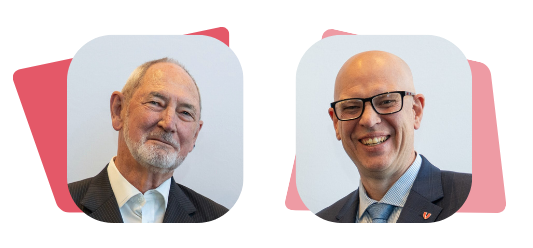
Volunteering Victoria exists to create opportunities for people and organisations to support members of the Australian community in need through volunteering, and to champion the value, rights and wellbeing of volunteers and the organisations that involve them. Our Constitution sets out this purpose clearly, and this report shares how, over the past year, we have worked with you to put that purpose into practice.
Strategy 2025 – setting our direction
Over the past year, the Board and staff have been developing the next iteration of our organisational strategy to guide how we respond to the changes and pressures across the volunteering system. While the working paper is still in draft, its core elements are already shaping our work.
Our vision remains a happier and healthier Victoria – and Victorians – because we volunteer. When people volunteer, we support each other, care for the future of our communities and all benefit from doing so.
Our purpose statement – that Volunteering Victoria enables organisations and individuals to meet community needs through volunteering – reinforces the objects in our Constitution and keeps us focused on enabling others, not doing everything ourselves.
Strategy discussion has focused our efforts on delivering four key strategic enablers to achieve our purpose:
- Shaping the operating and policy environment – so laws, policies, funding and systems enable more and better volunteering.
- Making volunteering appealing and accessible to all – with flexible, inclusive opportunities that reflect diverse communities and life stages.
- Supporting and connecting those who lead volunteers – recognising that sustainable volunteering depends on capable, resourced volunteer leadership.
- Elevating the value and recognition of volunteering – shifting volunteering from “nice to have” to “core business” for community, government and organisations.
Underlying this is a clear view of the issues we must tackle: disruption in how and why people volunteer, a changing “social contract” for volunteering, increasing regulation and complexity, pressure on volunteer leadership, and systems that are still too often analogue in a digital world. You will see these themes reflected in the work we do now and into the future.
What the State of Volunteering Report is telling us
In shaping Strategy 2025, we have drawn heavily on what volunteers, organisations and communities have told us through our recent State of Volunteering work.
The latest analysis shows that volunteering is not in decline – it is in transition. Around three in five Victorians over 15 years of age volunteered in 2024, contributing hundreds of millions of hours of unpaid service. At the same time, Victoria’s volunteer participation rate remains below the national average, with growth in informal and non-traditional volunteering but a decline in formal volunteering compared with 2020.
The message is clear: the generosity and intent are there – our systems, structures and recognition need to catch up. The findings underline the need to reset “the system” to reflect how people live and give today: more informal, more digital, more diverse, and more integrated into everyday life. They also reinforce the National Strategy for Volunteering’s emphasis on valuing volunteers, strengthening leadership and infrastructure, and designing roles that work for people’s changing motivations and circumstances.
Renewing our governance and Board
Strong governance is essential if we are to lead confidently on behalf of the sector and achieve our purposes. This year we have focused on Board renewal and on modernising the way we govern.
During the year we farewelled long-serving Director and former Chair, Bronwen Clark, who retired from the Board in November 2024, and Clemens Unger, who resigned in May 2025. We acknowledge their significant contribution and the steady leadership they provided through periods of change and, in Bronwen’s case, the guidance that enabled us to overcome the disruption of the COVID-19 period.
At this Annual General Meeting we will also farewell Directors Ash Youkyoung Lee, Andrew Coghlan and Kerry Uren, and we thank them for their unwavering commitment, insight and service to Volunteering Victoria.
Over the past year we have welcomed elected directors Alek Olszewski and Kalpana Ramani. We have also welcomed Jeremy Johnson, appointed to fill a casual vacancy in June 2025 and chair of the Risk and Governance Subcommittee. Together with those to be elected by members at this AGM, these changes ensure a mix of continuity and fresh perspectives in strategy, governance, finance and risk. We also must acknowledge Craig Edwards, a long-time volunteer and supporter who chairs our Finance and Audit subcommittee.
A key focus for the Board in the coming year is to bring to members a proposal for a new, modernised Constitution. Our existing Constitution, adopted in 2013, has served us well, but the context in which we operate has changed significantly. In updating it, we aim to align more clearly with our contemporary purpose and Strategy 2025, reflect best practice governance for peak bodies, make participation easier for members (including digitally and in hybrid settings), and ensure we continue to meet our legal and regulatory obligations while stewarding a growing and more complex organisation.
Financial stewardship and sustainability
Behind every program and advocacy initiative is the discipline of sound financial management. For the year ended 30 June 2025, Volunteering Victoria recorded a net comprehensive surplus of $18,093 (2024: $125,696). While more modest than the prior year – which included significant one-off factors – this surplus reflects careful stewardship in a period of growth and transition, including expanded grant-making to partners across Victoria.
Our Statement of Financial Position shows net assets of just over $1.0 million, ensuring our capacity to invest in strategic initiatives and sector support while funding grant programs. The Board is satisfied that the organisation is financially sound, and the independent auditor has issued an unqualified opinion on the financial report.
In simple terms: we are living within our means, investing in impact, and managing risk prudently on your behalf.
Looking ahead – an invitation
Taken together, our Constitutional purpose, the insights from our State of Volunteering work, Strategy 2025, our Board renewal and our financial position all point in the same direction:
- Volunteering in Victoria is strong, but changing.
- The sector needs modern structures, better recognition and stronger strategy to keep pace.
- Volunteering Victoria is well-placed – and obligated – to help lead that transformation.
None of this is possible without you. To our members, partners, Commonwealth and State funders, volunteers, Board and staff – thank you for your commitment, your challenge and your trust. We invite you to continue to work with us as we refine and adopt our new strategy, consider a modernised Constitution, and act on the opportunities identified in our State of Volunteering work so that more Victorians can give their time in ways that are meaningful, impactful and sustainable.
Together, we can ensure that volunteering remains one of Victoria’s greatest strengths – and that every hour given helps build the happier, healthier community we all want to see.
– Con O’Brien, Chair & Geoff Sharp, Chief Executive Officer
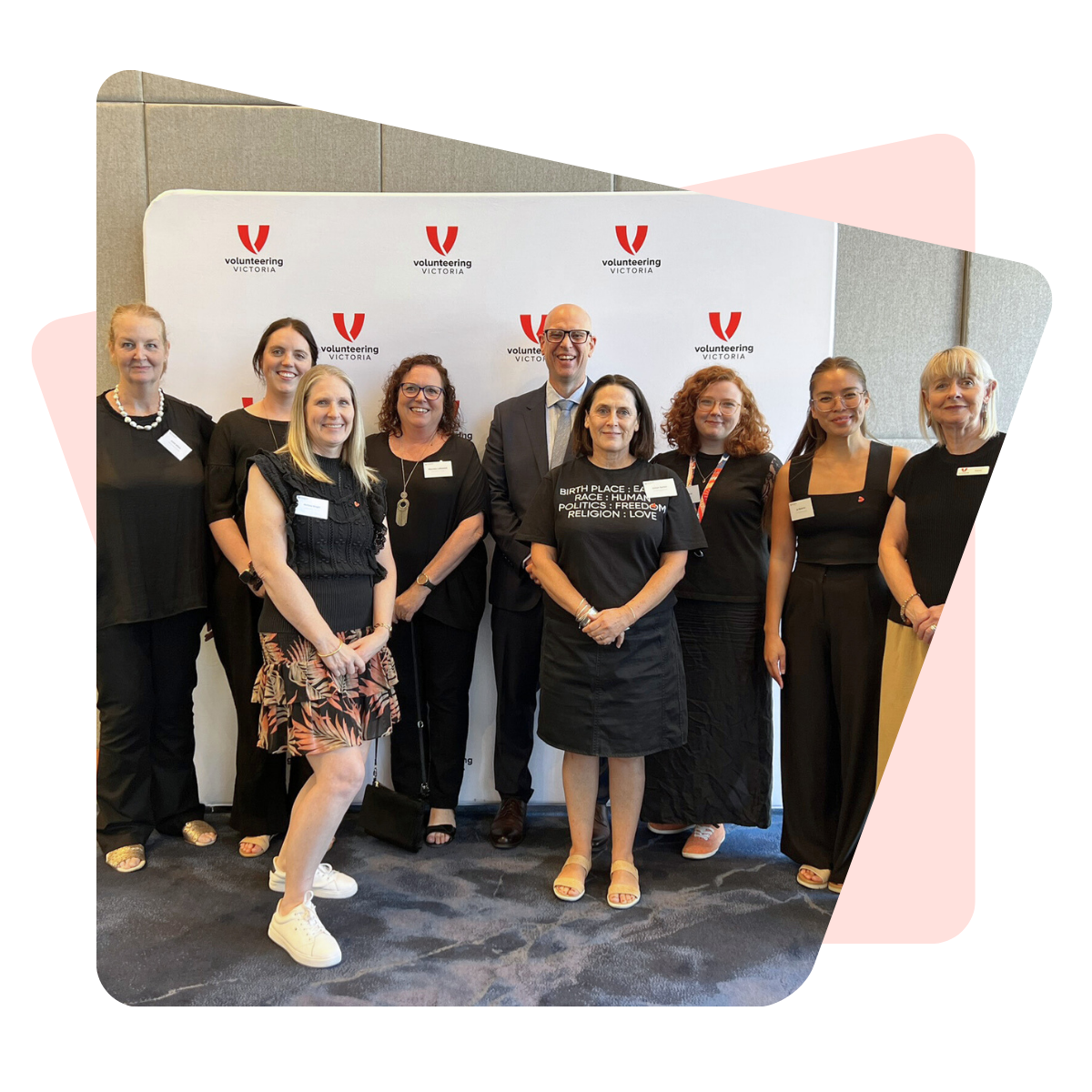
Inside Volunteering Victoria
Volunteering Victoria is the state peak body for volunteering, focusing on advocacy, sector development and the promotion of volunteering.
Our Purpose
We enable organisations and individuals to meet community needs through volunteering.
Our vision is a happier and healthier Victoria and Victorians because we volunteer.
And when we volunteer, we:
- support each other
- care for the future of our communities; and
- mutually benefit from doing so
Meet our members
Members help support our vision for Victorians to be happier and healthier by volunteering and building their communities. Together, we are working to build a vibrant, strong volunteering community that is inclusive, respected and sustainable.
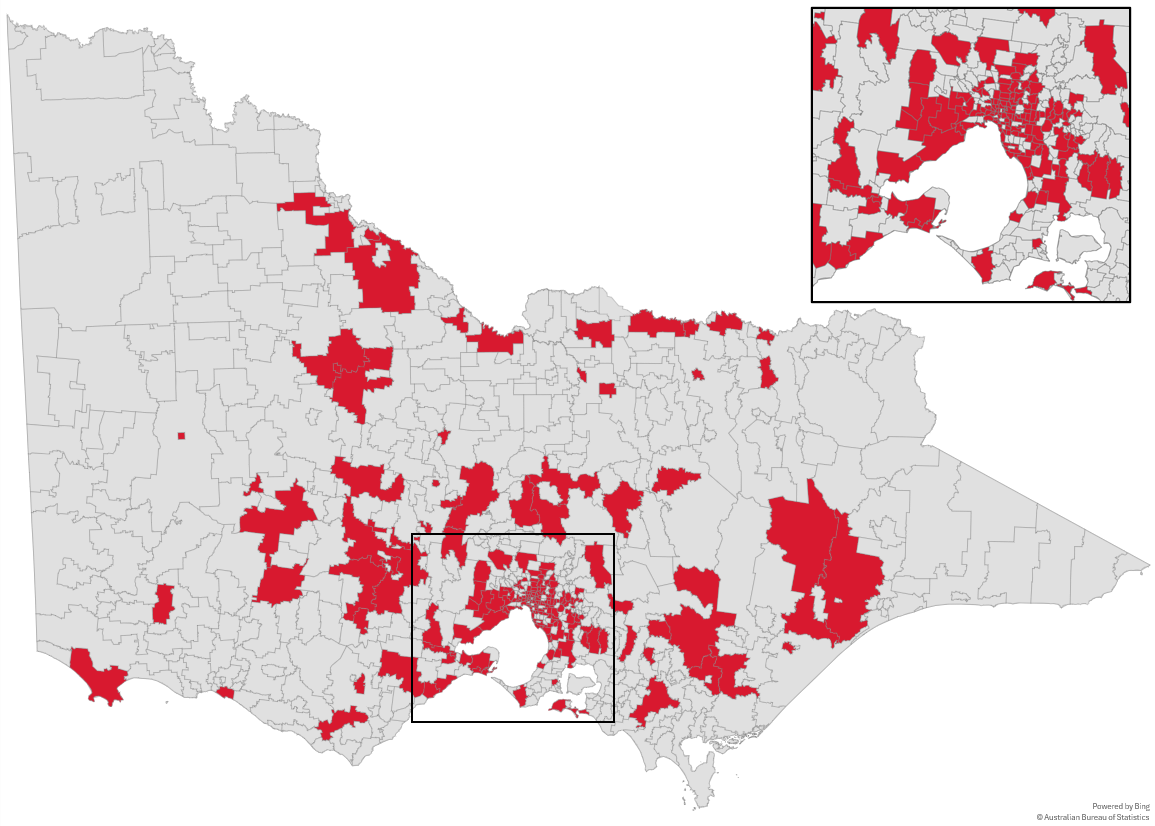
- Full Members = Includes Volunteer-Involving Organisations and Local Government Authorities (LGAs).
- Individual Members = Includes volunteers, volunteer supporters, or volunteer managers.
- Associate Members = Includes tertiary institutions, businesses, or for-profit organisations.
- Reciprocal Members = Includes Volunteering Victoria staff and volunteers, and State & Territory Volunteering Peak Bodies (VPBs).
What our members are saying
Top rated Volunteering Victoria services:
- Advocacy to government (76.9%)
- Online resources (75.4%)
- Free public training (73.8%)
- Data and research about volunteering (66.6%)

Enabling better
volunteering
Meaningful volunteering strengthens communities, fosters social inclusion, and drives positive social change.
We are dedicated to empowering volunteers and organisations across Victoria to build a more connected and compassionate society, where both volunteers and the communities they serve can thrive.
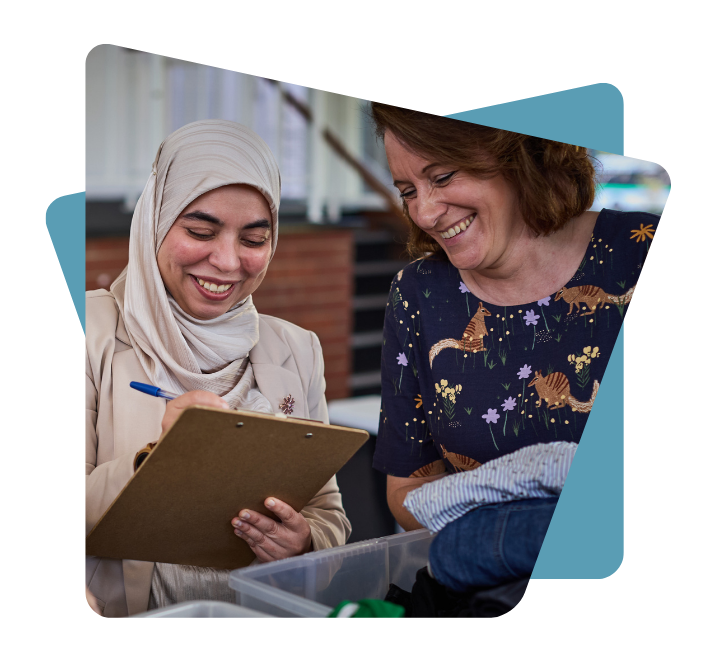
- Public training
- Tailored training
- CPD Program
- Mentoring Program
- Special interest groups
- Advisory groups
- Resources
Public training & workshops
Driving best practice in volunteer leadership.
Our training and workshops are designed to equip community leaders with skills and tools to maximise the impact of their volunteer programs. These interactive sessions are offered free of charge, through Volunteer Management Activity (2022-2026) funding.
Participants have the opportunity to learn from our experienced trainers, share knowledge, and connect with other volunteering professionals.
Topics delivered in 2024-25
34
Sessions held
309
Organisations represented
619
Total participants
97
Satisfaction rating
By Volunteering Victoria
- The 3Rs: Recruitment, Retention, and Recognition
- A-Z of Volunteer Management
- Building an Inclusive Volunteer Program
- Coaching Volunteers Through Organisational Change
- Introduction to the National Standards for Volunteer Involvement
- Introduction to the Volunteer Involvement Cycle
- Implementing the National Standards for Volunteer Involvement
- Targeted Recruitment and Engaging Young People
- The Tuff Stuff: Volunteer Performance Counselling
- Volunteer Screening Deconstructed
By sector partners
- Building Aboriginal Cultural Safety in the Workplace (via Koori Heritage Trust)
- Diversity and Inclusion (via South East Volunteers)
- Standard Mental Health First Aid (via South East Volunteers)
- Strengthen Your Workplace: Disability & Inclusion Modules (via EV Strengthening Communities)
- Top Legal Issues in Managing Volunteers (via Justice Connect)
What participants are saying
”“I enjoyed the session and the time flew by. It was the right amount of content with regular breaks and the break-out rooms were excellent.”
”"Training was easy to follow and gave good tips to implement change in my organisation."
”"Talking through the concepts with the break-out group was most beneficial. It allowed for sharing of ideas and learning how others do things in their roles."
Tailored training
Customised to suit the needs of your organisation.
Our tailored training service enables organisations, councils or community groups to access customised training to meet their specific needs. Our expert trainers cover a wide range of topics and deliver contextualised material to suit the audience.
Whilst the focus for many organisations was on upskilling leaders of volunteers and program managers, many organisations ran workshops which specifically targeted volunteers within their organisations or volunteers in local community groups.
Customised topics included:
- Rights, Responsibilities and Boundary Setting for Volunteers
- Communication and Conflict Resolution for Volunteers
- Safety Awareness Training for Volunteers
- How to Run Effective Meetings
Clients included the City of Greater Dandenong, Family Life, Whittlesea Community Connections, City of Kingston and City of Monash.
In addition, several councils invited us to deliver “Introduction to Volunteering” workshops. Community members were invited to find out about volunteering and to introduce them to what volunteering involves, and information about how to find a suitable volunteer role.
Case study:
Family Life
Volunteering Victoria has a long-standing relationship with Family Life and delivered several workshops for this highly-respected organisation in 2024-25.
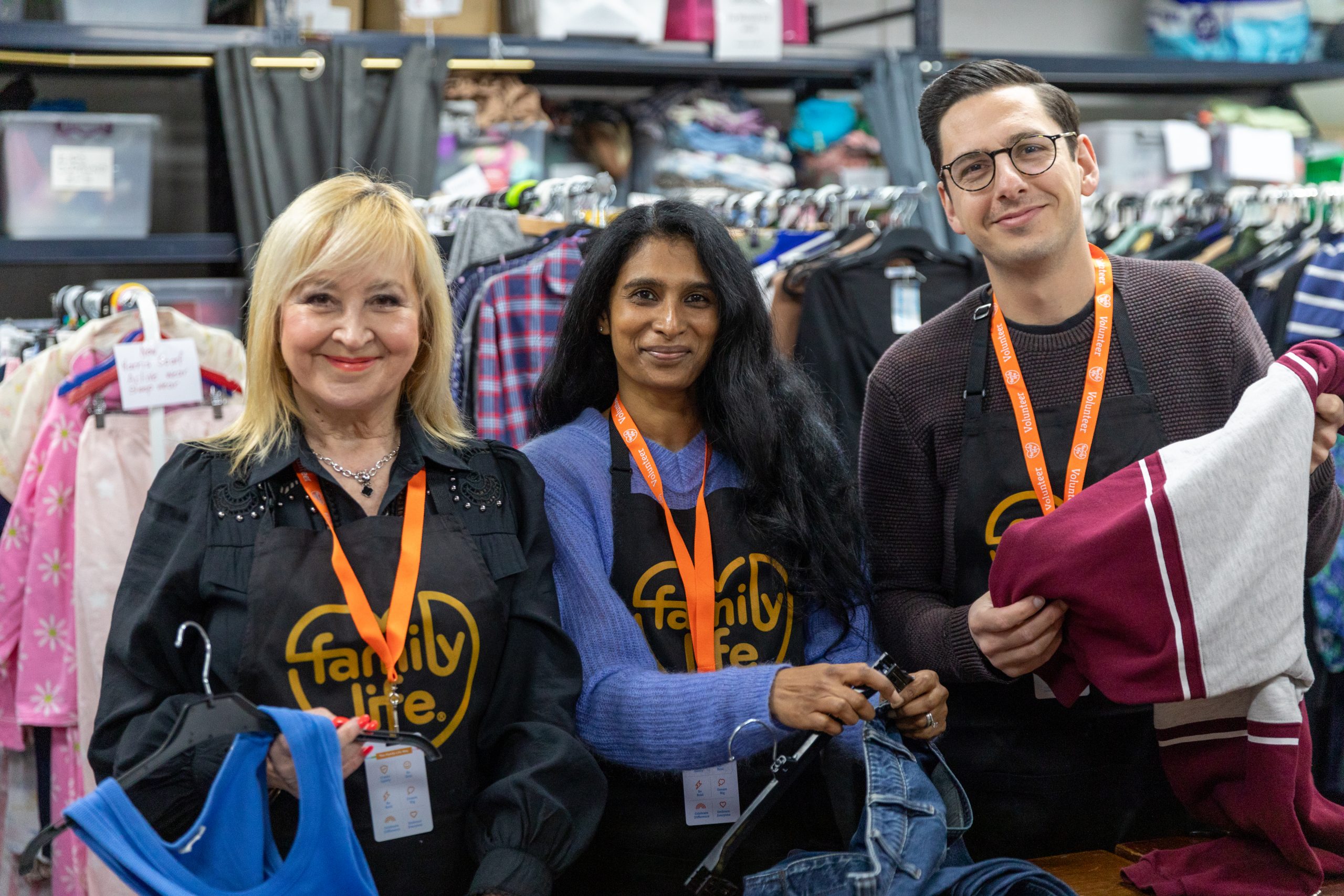
“Hazel Mynard and Volunteering Victoria have been an invaluable support in managing our volunteering program at Family Life. Their expertise has guided our staff through trusted advice and tailored training, while also delivering engaging sessions directly to our volunteers. These sessions have helped our volunteers better understand their rights and responsibilities, and empowered them with skills in communication and conflict resolution.
This partnership directly supports Family Life’s strategic focus on building strong volunteer engagement and retention. Feedback from our volunteers highlighted the training as engaging, informative and worthwhile, reinforcing the value of this collaboration.”
– Alida Williams, Director Strategy, Innovation & Engagement at Family Life
Continuing Professional Development
Supporting the growth and development of volunteering professionals.
Our Continuing Professional Development (CPD) Program offers a formal avenue to improve knowledge, skills and future employability through accreditation. Successful participants receive the ‘Professional Leader of Volunteers’ (PLV) title for the following 12-month period.
”"Engaging in ongoing learning and development helps validate my position as a leader in the volunteer sector."
Henni WadeManager Volunteer Services, Northern Health
Meet a CPD participant
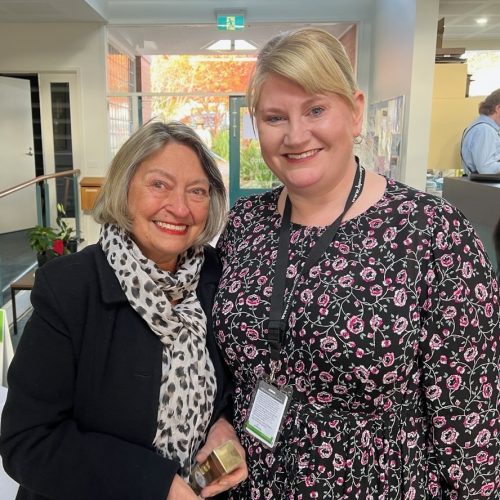
Why did you join Volunteering Victoria’s CPD Program?
I joined Volunteering Victoria’s CPD program because I see professional development as both a privilege and a responsibility of leadership. For me, it was not only about strengthening my own practice but also about creating opportunities for my colleagues to grow, learn, and see themselves as leaders of volunteers. Just as a volunteer realises, they are never “just” a volunteer, leaders in our sector must recognise they are not “just” coordinators. The CPD program reframes our roles and reminds us that what we do is not simply a job – it is a calling to shape how volunteering contributes to the foundation of community.
How has the CPD program contributed to your personal and professional growth?
The CPD program has been both grounding and energising. Personally, it has given me time and space to reflect, to pause in the midst of day-to-day demands and reconnect with why this work matters. For me, CPD is like a reset button – it lifts my eyes above the busyness and reminds me why I lead in the volunteering sector.
Professionally, it has broadened my capacity to align strategy with best practice, particularly around co-design, inclusion and measuring social impact. The program’s flexibility is invaluable; being able to choose learning activities that best suit the season of work I am in ensures my growth is practical and timely. The affordability of the program makes it accessible, even for not-for-profits with limited budgets, which means more leaders of volunteers across the sector can participate.
CPD also enables individuals to take a proactive approach to their own professional development, allowing them to address areas where they feel less confident at a pace that suits their needs or to deepen their expertise in areas where they are already strong. The Volunteering Victoria Guides are excellent tools to help align our thinking; they can be reviewed quickly to gain insights and build momentum. As a manager, I encourage staff to share their learnings during team meetings, which elevates their status within the team and boosts their confidence. We also draw on resources related to Aboriginal and Torres Strait Islander peoples, individuals from CALD backgrounds, and people with disabilities not only as part of our compliance obligations, but more importantly as tools to embed respect, equity, and inclusion into our everyday practice. These resources help shape how we welcome, engage, and support people, and they stand as evidence of our genuine commitment to building inclusive volunteer programs.
Equally important are the peer connections it fosters. Learning alongside other leaders of volunteers has been inspiring and validating. When we learn together, we grow together and that collective growth strengthens the whole sector. I’ve gained not only new skills but also new perspectives, encouragement and a deeper sense of belonging to a professional community.
What do you see as the biggest challenge in your role as a volunteer manager/leader?
One of the greatest challenges is holding the balance between compliance and compassion. Our sector is rightly facing greater regulatory requirements and community expectations, yet our success is measured in person-centred connection – in volunteers and consumers feeling valued, included and inspired. The CPD program helps by keeping us anchored to best practice and peak body resources, ensuring we meet every standard without losing sight of the people at the heart of volunteering. It reminds us that while frameworks and policies matter, what matters most are the stories behind them.
What tips or advice would you give to other volunteer managers/leaders?
My advice is to lean into both vision and warmth. Lead with heart but be bold by leading with courage – ask hard questions, co-design and co-create with volunteers and bring others along on the journey of change. Stay connected with your peers, volunteer resource centres and peak bodies, because we grow stronger when we learn together.
Finally, never underestimate the value of pausing to reflect. The day-to-day can be heavy, but when we create time to step back, we see that volunteers are not just giving hours – they are building belonging, connection and hope in our communities. To be a leader of volunteers is to be a champion of hope and that is both a responsibility and a gift.
“For me, CPD is like a reset button – it lifts my eyes above the busyness and reminds me why I lead in the volunteering sector.”
Lana Davis
Head of Volunteer Operations (Acting), Baptcare
Mentoring Program
Connecting leaders of volunteers.
We aim to support the development of specialist skills and knowledge in the volunteering sector, and believe this is best achieved through collaboration and the exchange of insights, experience, and wisdom.
Our Mentoring Program brings together experienced senior leaders of volunteers with entry-level managers of volunteers.
This program offers both professional and personal development opportunities for passionate individuals seeking to develop their skills and careers.
Meet a Mentoring Pair

Why did you join the Mentoring Program?
I joined the Mentoring Program because I know firsthand how valuable it can be — I was a mentee in the program last year, and that experience was an inspiring and practical resource in my professional journey. Having someone to talk things through with, bounce around ideas, and seek advice on volunteer-related challenges was especially helpful as a “team of one” managing a whole volunteer program. This year, I wanted to give back by offering that same support to someone else starting their leadership journey, while continuing to contribute to strengthening our sector.
What has been the most rewarding part of mentoring an entry-level volunteer leader?
The most rewarding part has been seeing their confidence and leadership grow over time. It’s inspiring to watch someone go from seeking guidance to leading with clarity and purpose.
It was also a particularly meaningful and natural pairing because we both started as volunteers within our organisations before stepping into our current roles. That shared experience means we truly understand what it’s like to be a volunteer — the challenges, the motivations, and the kind of support that makes a difference.
On top of that, we both work in similar health-related fields, which created a strong foundation for exchanging ideas, exploring sector-specific solutions, and learning from one another.
What tips or advice would you give to other volunteer managers/leaders?
My biggest advice is to embrace collaboration and curiosity. Volunteer management can sometimes feel isolating, especially if you’re the only person in your program, so seek out networks, mentors, and peers to share ideas and challenges with — and what better way to do so than by being part of Volunteering Victoria’s Mentoring Program.
Build strong relationships with your volunteers by listening deeply to their motivations and needs, and always lead with empathetic and inclusive practices. When volunteers feel valued and supported, they become the heart and voice of your organisation.

Why did you join the Mentoring Program?
As someone new to both the volunteering sector and Australia, I joined the Mentoring Program to gain guidance and support in my first role as a Volunteer Coordinator. Our organisation was just beginning to build its volunteer program, and I needed help understanding the foundational elements—policies, frameworks, and best practices. The program offered a structured way to learn from someone experienced in the field, and I saw it as an opportunity to grow both professionally and personally.
How has your experience in the program shaped your career in volunteer management?
The mentorship has been incredibly valuable in shaping my first year in volunteer management. My mentor, Boudie, provided consistent support, helping me understand the intricacies of volunteer structures and guiding me through the process of building a strong foundation for our program. His advice helped me improve communication with my team, develop meaningful volunteer roles, and foster positive relationships within the organisation.
Beyond the professional benefits, I’ve gained a trusted friend and mentor whose patience and encouragement made a lasting impact. This experience has given me confidence and clarity in my role and has truly added value to my work.
What tips or advice would you give to other volunteer managers/leaders?
Find a mentor early – It really helps to have someone guide you when you’re starting out.
Keep learning – Don’t be afraid to ask questions. Every conversation is a chance to learn something new.
Focus on people – Volunteer management is about building strong relationships, not just following processes.
Get the basics right – Clear policies, role descriptions, and good communication make everything easier.
Celebrate small wins – Noticing and celebrating progress keeps everyone motivated.
“It’s inspiring to watch someone go from seeking guidance to leading with clarity and purpose.”
Abdurahman Katamish (Boudie) (Mentor)
Volunteer & Student Coordinator, Thorne Harbour Health
“Beyond the professional benefits, I’ve gained a trusted friend and mentor whose patience and encouragement made a lasting impact.”
Antakshri Pahwa (Mentee)
Volunteer Coordinator, IPC Health
Special Interest Groups
Facilitating shared knowledge.
Our Special Interest Groups (SIGs) are an opportunity for volunteer managers to come together to discuss emerging issues in the sector across a range of topics, and expand their professional networks.
8
Sessions held
200
Total attendees
177
Organisations represented
What participants are saying
”"The sessions are a great opportunity to hear someone come and speak of their experience, learnings and challenges."
”"If we want to become an inclusive volunteer organisation, we can start the change now."
”"The calibre of information provided is priceless."
Advisory Groups
Listening to diverse voices is crucial for shaping and strengthening our communities.
To ensure we understand their unique perspectives and experiences, we have established Advisory Groups for the following cohorts:
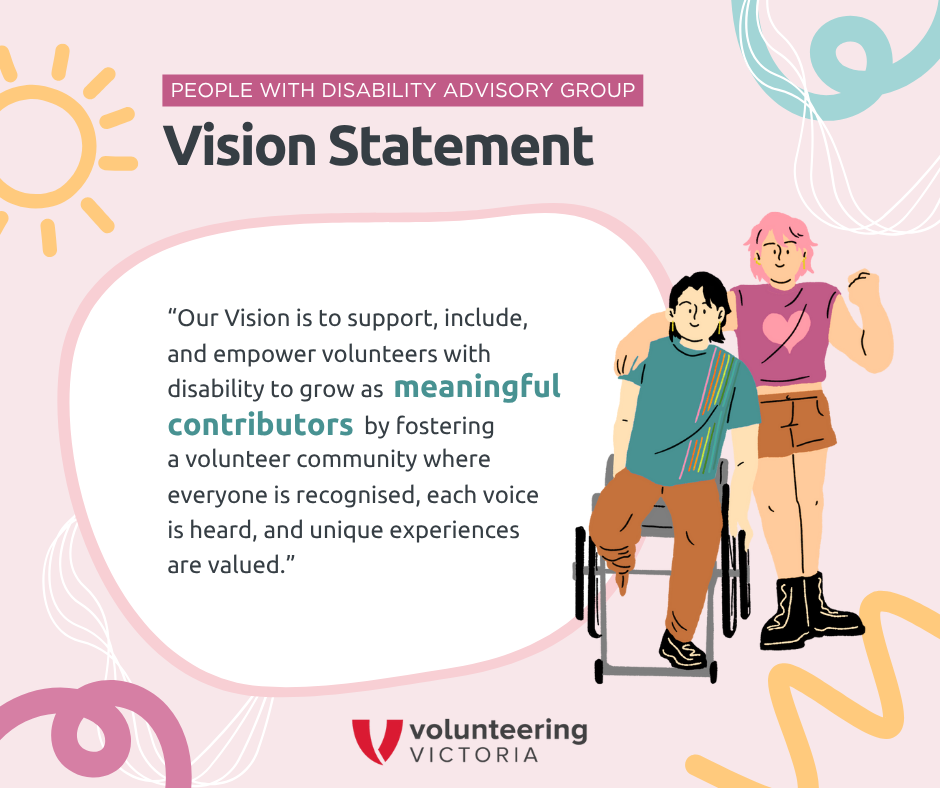
- People with disability
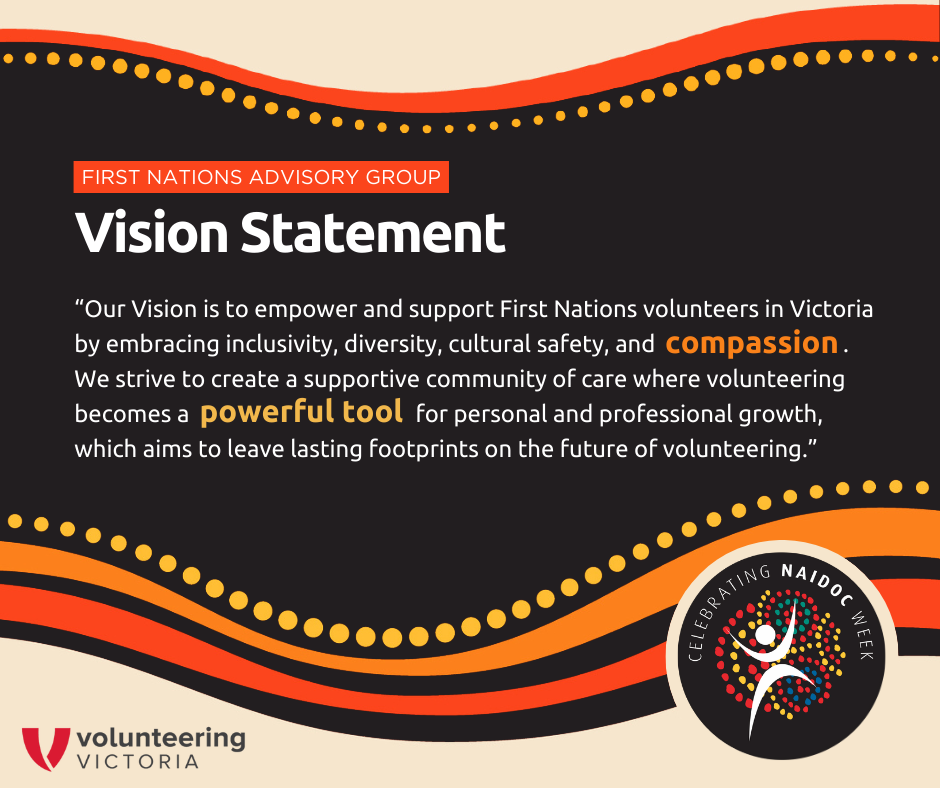
- First Nations Peoples
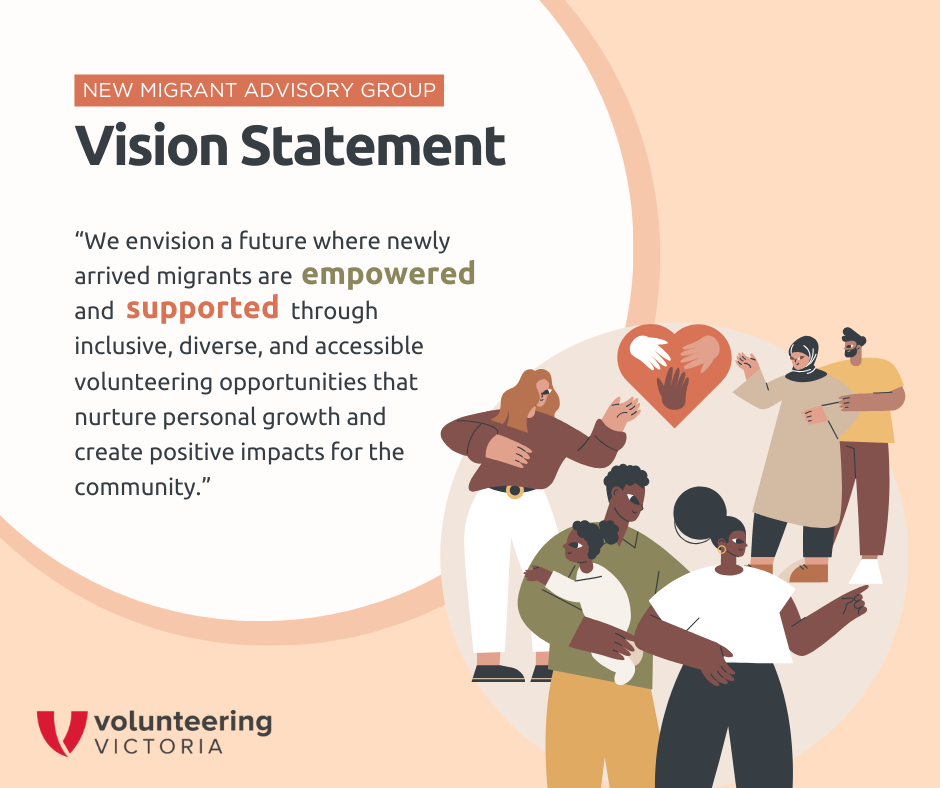
- Newly arrived migrants
The groups meet three times a year to:
- Contribute to resource development
- Understand and break down barriers to volunteering
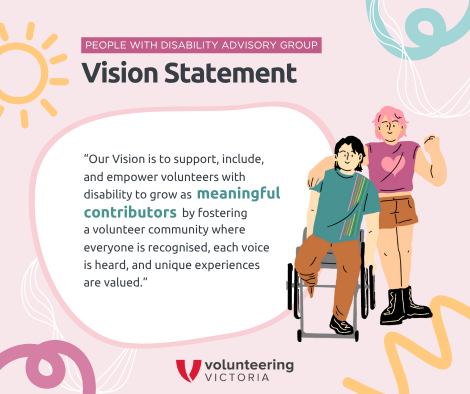
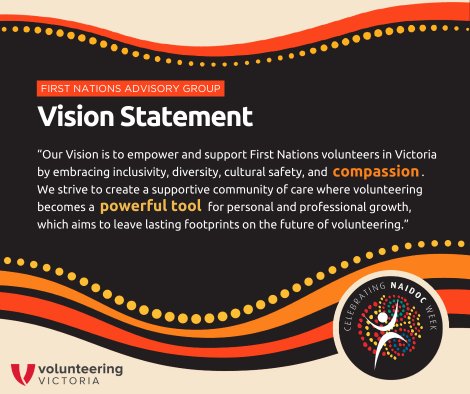
- Work towards a shared vision statement, providing a common sense of purpose.
Vision statements
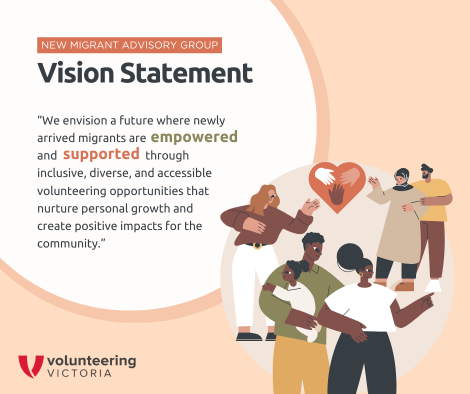
Resources produced in 2024-25
- Fact sheet: Common Misconceptions for Newly Arrived Migrant Volunteers
- Fact sheet: Engaging Volunteers with Disabilities – Volunteer Involvement Cycle
- Fact sheet: Top Tips for Supporting Volunteers with Disabilities
Resources & guides
Providing practical tools for you and your volunteers to thrive.
Our website hosts a growing collection of guides, templates and how-to resources designed to support quality volunteering and effective volunteer management. These cover everything from recruitment and onboarding to governance, safety, inclusion and program evaluation – all grounded in sector best practice.
We continue to review and update our materials throughout the year, adding new resources in response to emerging needs and feedback from the sector. This ongoing work ensures volunteer managers and organisations have access to clear, reliable and up-to-date information when they need it.
View guides
Top guides in 2024-25
Inclusive volunteering resources
Volunteering has a powerful impact when it is accessible to all and reflects our diverse communities. With the support of our community partners across the state, this year we continued to build our collection of resources focusing on inclusion.
Funded through the Volunteer Management Activity (VMA), the page contains case studies on how to successfully build an inclusive volunteer program and involve volunteers from diverse backgrounds.
Empowering community
Enabling organisations and individuals to meet community needs through volunteering.
We continue to invest in community-led solutions by directing funding where it’s needed most – at the local level. Communities understand their own challenges and opportunities better than anyone, and our role is to back that knowledge with the right support.
At Volunteering Victoria, we define success by what happens in VIOs and communities across Victoria, so we work to push resources where they are needed to make volunteering stronger.
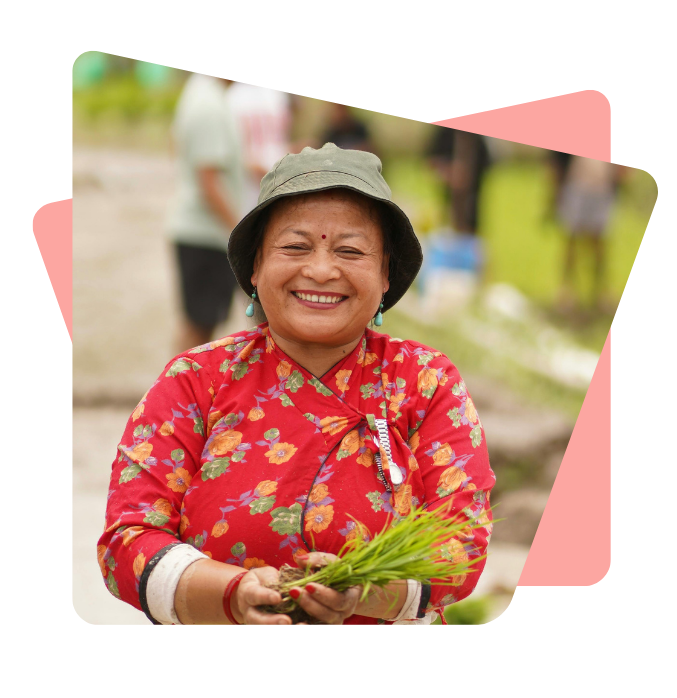
Grants to Community
This year, we distributed a total of $2,006,104.64 from the grants and services income we received, which represents 62% of our income from the Australian Government through the Department of Social Services.
- $512,524 through the 29 Strong and Resilient Communities (SARC) small grants providing direct grants to grassroots, volunteer-involving organisations across Victoria so they can build their capability, strengthen governance and systems, and run inclusive community programs that respond to local needs.
- $1.45 Million through the Volunteer Management Activity (VMA): two streams of activity funded by the Australian Government to reduce barriers to volunteering for priority cohorts – including:
• People with disability
• First Nations communities
• Newly arrived migrants
• Young people
• Women experiencing vulnerability, and;
• People who are unemployed.
This includes –
- $854,437 to 8 VMA Regional Consortia: groups of local organisations working together to design and deliver inclusive volunteering initiatives with and for priority cohorts and communities.
- $600,000 to 13 VMA Volunteer Resource Centres (VRCs): local volunteering infrastructure that links volunteers and organisations, provides practical support and training, and adapts services so that priority cohorts can participate more easily in volunteering.
Strong and Resilient Communities (SARC) Grants
Enabling small organisations to make big local impact.
Supported by the Australian Government Department of Social Services, Volunteering Victoria were proud to deliver grants for one-off, time limited projects to support small grassroots organisations across the state.
The objectives of the SARC grants were to:
- build volunteer management capability within organisations;
- uplift volunteer capability, including volunteer knowledge, skills and volunteer numbers; and
- support alignment with the strategic objectives of the National Strategy for Volunteering and National Standards for Volunteer Involvement.
Impact achieved
2,643 People with disabilities and/or mental health issues to participate in the community, and work towards becoming or remaining independent and engaged in the economy and/or society.
1,975 People who are unemployed to increase participation in their community and/or increase their capacity to engage in employment, training, or existing employment services
1,579 Women who experience, or are at risk of experiencing isolation or discrimination to participate in the community and/or economy and increase their self-agency
464 Young people (12 to 18 years) who are disengaged, or at risk of disengaging, from education to reconnect with their community, school, training and/or employment
325
EOIs received in VIC
(42% of total received nationally)
85
applications submitted
29
funded projects delivered
97
of grantees achieved 6+ grant objectives through their activities
(59% achieved all 9 objectives)
”"One of the most meaningful funding for our organisational growth and social impact, because this funded activity enabled us to reach and engage with so many new types of stakeholders in our community by hosting mix-audience workshops.
It also contributed to a more vibrant community, as we were able to offer creative, collaborative spaces where an unlikely mix of demographics intersected and could get to know one another better.”
Grant recipient
”"We observed a lack of understanding and strategies within our volunteers which lead to people feeling ‘out of their depth’, ‘frustrated’, and a fall in confidence.
The Strong and Resilient Communities (SARC) Community Support Grant has been a game changer for our organisation. This project enabled us to develop and deliver a training package about supporting neurodivergent people."
Grant recipient
VMA – Regional Consortia
Working with communities to remove barriers to volunteering.
Across Victoria, regional consortia deliver the VMA by working with local partners and priority cohorts – including people with disability, First Nations peoples, newly arrived migrants, young people, women experiencing vulnerability and people who are unemployed.
What the consortia do
- Co-design inclusive volunteering pathways with and for priority cohorts.
- Partner with local organisations that support, need, partner with and are supported by volunteers to respond to local needs.
- Build capability in volunteer-involving organisations through training, mentoring and practical tools.
Impact achieved
-
Brings communities and organisations together to design more inclusive volunteering.
-
Strengthens local networks that will last beyond individual projects.
-
Grows a more diverse, capable and connected volunteer sector across Victoria.
Case studies
The Volunteer Management Activity (VMA) is the national infrastructure that has enabled much of volunteering to thrive across the country.
Since its redesign in 2021, the VMA has delivered the systems, tools, and partnerships that help volunteer-involving organisations recruit, retain, and support volunteers, especially those from priority cohorts.
Volunteering contributes billions of dollars in unpaid labour, it strengthens community resilience, and delivers benefits to wellbeing, inclusion, and workforce participation. Yet this is sustained on a fraction of its true value.
Strategic investment in the VMA is a multiplier, unlocking greater participation, reducing barriers, and building national resilience. It is critical to maintain the momentum of the initial VMA activity to help organisations navigate ongoing structural changes effectively and build on the progress already achieved.
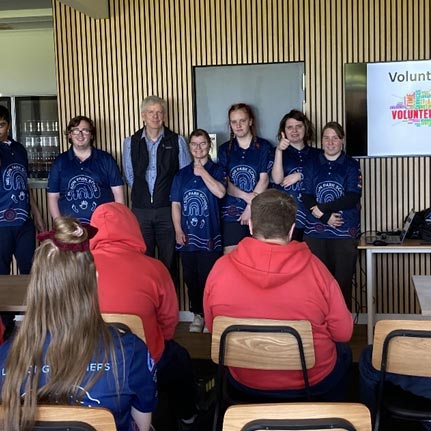
Volunteering Geelong partnered with special education schools in the region to help young people with disabilities participate in volunteering. The program supports students to build confidence, develop life and work-ready skills, and create more opportunities to engage in the community.
Special education schools provide tailored education and support for students with disabilities or higher needs. These young people may face academic, social and emotional challenges, often experiencing low confidence and difficulty navigating unfamiliar situations.
Program aims
The program aims to help students reach their personal potential and explore future pathways – whether that’s employment or contributing to their community through volunteering.
Key goals included:
- Enhancing students’ understanding of what it means to contribute to community
- Developing employment and life skills
- Building confidence
Why it matters
For many students in special education, transitioning from school to employment is challenging. Pathways to work can be limited, and navigating adulthood can be overwhelming. In Years 11 and 12, the school curriculum begins focusing on their post-school pathways – preparing students for what comes next.
Volunteering can play an important role in this transition. It helps students build skills, explore employment options, and connect with their community. For some, employment may not be possible – but volunteering can provide a meaningful way to participate and create a sense of belonging.
Read the full case study below.
Barwon South West
Community Integration: Special Education Schools
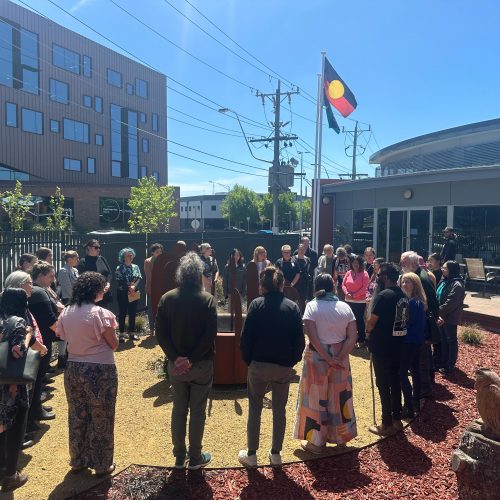
As the peak body for volunteering in Ballarat, the Ballarat Foundation supports
volunteer-involving organisations by providing education for staff and volunteers. These programs address the barriers faced by volunteers from diverse community groups, fostering inclusion and understanding.
Earlier this year, Ballarat Foundation hosted a First Nations Cultural Awareness and Yarning Session, held in the Tree Room at the Ballarat and District Aboriginal Co-operative (BADAC). Participants were encouraged to learn, listen, and engage in open dialogue together to create a shared knowledge of Indigenous perspective.
Key Findings
The workshop had a significant impact on participants, as reflected in the post-event evaluation:
- Improved knowledge: Over 90% of participants agreed or strongly agreed that their understanding of Aboriginal and Torres Strait Islander culture had improved as a result of the session.
- Increased confidence: More than half of the attendees reported feeling more confident in sharing information about Aboriginal and Torres Strait Islander peoples with others.
- Awareness of personal bias: Almost all participants (97%) recognised how personal biases can influence their perceptions of other cultures.
These results reflect the success of the workshop in building cultural awareness and fostering respectful engagement.
Read full case study below.
Grampians
Cultural Awareness & Yarning Session
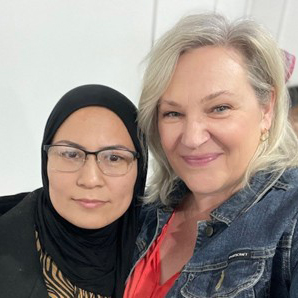
Starting a new life in a foreign country, Amina had no idea the impact she would have through volunteering and supporting other newly arrived women.
Arriving on our shores, Amina struggled with the new landscape along with learning Australian customs and ‘Aussie slang’. Thankfully she found her way to Wellsprings for Women, an organisation dedicated to assisting newly arrived migrant women and leading the way for women to thrive through inclusiveness and diversity.
Here, Amina forged ahead, learning English, taking classes and becoming proficient in her computer skills. Slowly her confidence grew to the point she started volunteering and supporting other women who were beginning their own transition as migrants.
It was through her volunteer work that Amina was selected to be part of a co-design team for a new program within the organisation” ‘Pathways to Volunteering’. This is a special program designed specifically to encourage and support newly arrived migrants in their volunteering journey.
One of the key strengths of this process was that it was designed in collaboration with the women it most impacted. The program has been pivotal in reaching women from migrant backgrounds and allowing them to learn new skills, meet new people, and make an impact in society.
Read full case study below.
Southern Metro
Pathways to Volunteering: Amina

Project Pitch is a school-based program encouraging Year 10-11 students to
explore volunteering. Developed by the Ballarat Foundation and Highlights
Local Learning and Employment Network (HLLEN), the program uses a ‘pitch’
format to help students learn about local organisations, practise public
speaking, and consider volunteering as part of their future pathways
Program Structure
After discussions with local schools, the program was structured as three weekly sessions of 90 minutes to 2 hours each. Each session included guest speakers from local volunteer-involving organisations and time for student discussion.
- Session 1: Representatives from local volunteer-involving organisations share their personal journeys, introduce their organisation, and outline current volunteering opportunities.
- Session 2: Students research an organisation and start creating their “pitch” on why their peers should volunteer there, with guidance on presentation and public speaking.
- Session 3: Students deliver their pitch to their peers and a judging panel of volunteer organisation representatives, receiving feedback on their research and presentation skills.
Program Outcomes
Engaging young people in volunteering is a two-way process that requires shifting perspectives on both sides. Many young people may not initially see the value of volunteering, while some organisations view youth volunteers as difficult to place.
Project Pitch has helped bridge this gap, showing students how volunteering can build job-ready skills and providing organisations with an opportunity to see the energy and fresh ideas young volunteers bring
Read full case study below.
Grampians
Project Pitch
VMA – Volunteer Resource Centres
Local infrastructure for meaningful and inclusive volunteering.
As part of the VMA, in 2024/2025 we funded Volunteer Resource Centres (VRCs) as local hubs for volunteering across metropolitan, regional and rural Victoria.
What VRCs do
- Provide one-on-one support to organisations on policies, role design, risk and best practice volunteer management.
- Offer local training and networking for the people who manage or coordinate volunteers, tailored to community needs.
- Promote volunteering and support volunteers from priority cohorts to find suitable roles.
Impact achieved
- Ensure practical, on-the-ground support is available for organisations that rely on volunteers.
- Help organisations welcome and retain volunteers from priority cohorts in meaningful roles.
- Strengthen the local volunteering ecosystem so communities can respond to changing needs and opportunities.
Shaping policy & research
We embrace the opportunity to be a voice for the sector, by advocating on key issues impacting volunteers and volunteer-involving organisations.
Alongside formal submissions and position papers, we maintain regular meetings with key government contacts, advocating for increased support for volunteering and the need to address complex issues impacting the sector.
”Volunteering Victoria does a great job being an advocate for volunteering, leading change, and creating connections.
Volunteering Victoria member
State of Volunteering Report
To create change, we first need to understand the full picture.
As the state peak body for volunteering, Volunteering Victoria is committed to sharing the latest volunteering trends with members and stakeholders.
The 2025 State of Volunteering Report is a testament to the enduring spirit and contribution of Victoria’s volunteers. Understanding who volunteers – and who doesn’t – is critical for shaping policies and practices that promote inclusive, sustainable volunteer engagement.
Volunteering is transforming. The report offers a clearer picture of how, where, and why Victorians volunteer – and what must change to support them into the future.

Public Survey
2,540
respondents
Volunteer Manager Survey
326
respondents
Focus Groups
225
participants
Explore the findings:
- A sector in transition
- Let’s make it easier to say “yes”
- Behind every volunteer is someone making it happen
- Digital tools should strengthen, not replace connection
- Volunteers and volunteering looks different
A sector in transition
Over the past five years, volunteering in Victoria has undergone significant change. While the COVID-19 pandemic saw a sharp decline in participation, the story in 2025 is one of remarkable recovery – but also transformation.
There has been a strong resurgence in participation since the pandemic:
- 58.9% of Victorians volunteer in their community.
- Collectively, Victorian volunteers contribute over 732 million hours.
- 69.4% of young Victorians (15-24 years old) volunteer; the highest rate of any age group.
3.3 million Victorians
(aged 15+) engaged in volunteering
However, this recovery reflects not just a return to volunteering, but a transformation in how people engage. While formal volunteering has declined, informal and nontraditional forms of volunteering are on the rise.
”While many Victorians continue to give their time, they are choosing new models. This shift is not a sign of disengagement – it is a sign that people’s lives, motivations, and circumstances have changed.
To remain relevant and effective, systems of support and recognition must evolve to embrace these new models of civic contribution.
Let's make it easier to say "yes"
Despite strong interest in volunteering, many people encounter barriers that limit their participation.
- Complex onboarding processes, such as administrative requirements and unclear expectations.
- Financial constraints, including cost of living pressures and lack of reimbursement.
- Time and transport limitations, with work or study commitments (46.1%), financial costs (32%), and transport issues (14.7%) commonly cited by current volunteers.
- Confidence and awareness gaps, especially among non-volunteers who often don’t know how to get started or where to find opportunities.
Making volunteering more accessible means more than outreach. It requires a full rethink of how we recruit, onboard, and support people to get involved.
”"It took me weeks to find a role that didn’t need five forms and a Police Check."
Focus group participant
Behind every volunteer is someone making it happen
Ensuring a healthy volunteering system requires investment in the people who lead it.
Leaders of Volunteers are the unseen infrastructure behind much of the state’s volunteering. They train, support, and coordinate the people who give their time.
However, many are under-resourced and at risk of leaving the sector.
In 2024, less than 60% of volunteer leaders said they expected to still be in their role in three years.
Many are older, unpaid, or managing programs without formal support.
Volunteer-Involving Organisations in Victoria currently invest less than $6 per volunteer hour.
This is well below the national average of $13.97/hour.
Investment is needed into professional development, leadership pathways, and funding for the critical infrastructure of coordination and support.
It was also clear from the research data that this reflects the financial challenges many Volunteer-Involving Organisations are facing.
Digital tools should strengthen, not replace connection
Technology is reshaping how people volunteer. Online and remote roles have increased significantly, especially among younger and culturally diverse communities. These options offer flexibility and accessibility – but they must not come at the cost of community connection.
Current digital tools often treat volunteers as a list to fill, rather than as people to engage. Systems are often clunky, computer (not phone) orientated, impersonal, or inaccessible to smaller organisations. The digital divide in rural and vulnerable communities is real and must be considered.
There is an opportunity to redesign digital volunteering tools, portals, platforms and interactions to foster connection, reduce friction, and enhance accessibility. Doing so could unlock wider participation and stronger retention.
Volunteers and volunteering looks different
Some of the strongest contributions to volunteering are coming from groups who have historically been underrepresented or undervalued.
Young people (15–24) now have the highest volunteering rate in the state, averaging more hours than any other age group.
They are values-driven, digitally fluent, and eager to contribute – but often face barriers related to cost, burnout, and lack of fit.
Culturally and linguistically diverse (CALD) volunteers demonstrate exceptional participation (71%), often volunteering across multiple settings and for reasons rooted in culture, identity, and reciprocity.
Yet they face significantly higher costs and more systemic barriers.
Volunteers with disability or mental health conditions give more hours on average and report high wellbeing benefits.
Still, they also report experiencing the most barriers, particularly around access, confidence, and fatigue.
To sustain this shift, we must treat these groups not as “marginal” but as central to the future of volunteering.
Inclusion must be built into role design, leadership, recognition, and access.
”“There’s this idea that young people don’t care. But I do care – I just don’t know where I’m supposed to go.”
Focus group participant
Active communities are healthy communities.
We support the unique and varied ways Victorians contribute and give their time.
Celebrating volunteering

3.3+ million
Victorian
Volunteers
58.9% of the Victorian population (aged 15+)
Meet some Victorian volunteers
We are proud to showcase the diverse experiences of volunteers across the state, and the profound impact they make every day.
Volunteers are the heart of our communities, and we love sharing their stories. They are the driving force behind positive change, selflessly giving their time, skills, and passion to build stronger, more connected communities.

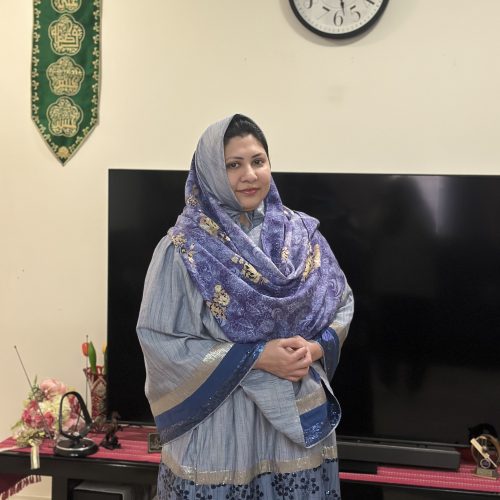
Overcoming Barriers: Mariyam’s Volunteering Journey
More than a decade ago, Mariyam arrived in Australia from Pakistan, having not yet tried volunteering. Her early years were challenging, and although she could speak English, her confidence was low.
“My language was a big barrier,” she states. “It was not that I couldn’t speak English – I could, but not that well, especially when you add a different accent. Before volunteering, my confidence level was bad. People used to make fun of me. That affected me badly and every time I talked, I felt like I was not saying anything right.”
Despite these challenges, Mariyam held on to a long-term goal: becoming an Executive Assistant (EA). However, without local experience or confidence in the workplace, she didn’t see how she could get there. At the time, she was independently running her own small catering business, something she enjoyed but was doing primarily to help support her family financially.
Her turning point came through a friend. “One of my friends told me about her experience of volunteering and asked me to see these assessors and talk to them about volunteering options,” she says. The very next day, Mariyam booked an interview. The assessors offered her a volunteering role as a receptionist in their organisation. “It was the best news for me at that time,” she remembers.
Mariyam volunteered in that reception role for six months. The organisation provided her with strong support from the start.
“They provided me with the knowledge I needed to get employment, boosted my confidence level, and showed me my worth,” she shares.
They also gently helped her with language, correcting her pronunciation without judgment. “Instead of making fun of me like others, they told me it’s okay and corrected me. They didn’t make me feel unwelcome.”
The impact was profound.
“Volunteering boosted my confidence and knowledge about the work environment,” Mariyam says.
It also shifted how she saw herself. She realised that just because someone came from overseas didn’t mean they lacked ability. “I hope other people understand that just because someone came from overseas doesn’t mean they don’t know anything. Give them some time and you will be surprised by the result.”
Her commitment and growth didn’t go unnoticed. After six months of volunteering, the organisation offered her a casual position. That role later became a full-time job, and eventually, she was promoted to Team Leader in the very same organisation where she first volunteered.
Mariyam credits volunteering not just with helping her overcome language and confidence barriers, but also with opening the door to her career goals. “My parents feel so proud and always praise me in front of their friends,” she says with a smile.
“I want new migrants to know not to feel less about themselves, just connect with the right organisation and you will know your worth.”
Her perspective also challenges common assumptions about volunteering. “People often think that volunteering is a waste of time, and the organisation is taking advantage of you. I’ve heard that all myself when I was volunteering.” she says. “No, that’s not the case. Remember: You want something from them as well, whether it’s experience or something else. Just give it your 100% and you will see how people will come to you and respect you.”
Mariyam’s advice for others starting their volunteer journey is straightforward:
“Be patient, talk to your supervisor about what you are trying to achieve from this journey, and set a goal for yourself too. Trust me, goals are important. Don’t take volunteering lightly; it’s an honour to be a volunteer.”
Looking back, Mariyam sees volunteering as the bridge from struggling with language confidence to leading a team in a full-time role.
“Don’t take volunteering lightly; it’s an honour to be a volunteer.”
Mariyam
EV Strengthening Communities

What is your volunteer role?
I have been volunteering with Digital Sisters, to help women – including single mothers and young girls – to get used to using different technology, like phones and laptops, and how to access things online.
Why did you decide to start volunteering?
I started volunteering to get engaged in the community, and to see the kind of people I was going to deal with when coming to Australia. I knew volunteering would be a quick way for me to get to know people and to interact with them. I also wanted to do volunteering because I saw lots of people from my community that needed help, but they had a language barrier, which wasn’t a problem for me. If I volunteered and tried to help them, that would benefit my society and my community.
How has volunteering impacted you?
I would say volunteering has helped me to become a much more patient person. Volunteering with different people – with all their different backgrounds, cultures and beliefs – you come to a state of mind where you have to give them time. You’re not trying to do something for your own benefit, but you’re trying to help them. So you have to be patient with them and try to take things step-by-step.
Has there been one moment or memory that has stuck with you from your volunteering?
One client that I helped while volunteering – I came across her at a shopping centre. When she saw me, she said “That’s Therese, she helped me to know how to shop online and it’s because of her that I can do my parking and know how to use transport.” Her telling me that was so rewarding and it stuck in my mind. I just want to do more volunteering; not because I want to receive the good comments, but because I know it’s helping them and actually makes them happy to live well and comfortably in society.
What would you say to someone thinking about volunteering?
I would tell them to go for it. It’s something really good and rewarding. Although it’s something you’re not being paid for, at the end of the road it has so much light and so many benefits.
“I just want to do more volunteering.. because I know it’s helping [others] live well and comfortably in society.”
Therese
Digital Sisters
What made you decide to become a volunteer?
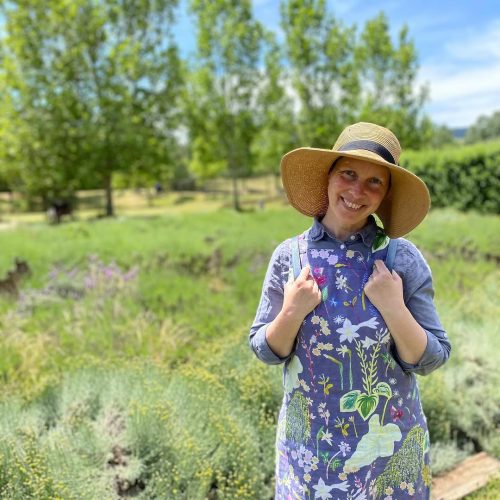
My mum was always volunteering in different roles throughout her life. I could see the benefit her work had on the communities she helped, but also on herself. My mum regularly visited people living in aged care. I am following her example. In my current volunteer role, I visit people living in local residential aged care and offer a hand and arm massage and a chat. Using essential oils and gentle massage engages the people I work with in a sensory experience.
What do you enjoy about being a volunteer?
I enjoy that you can choose the ways you assist when you volunteer. The work is flexible, which is great as sometimes I have extra family commitments. You can use your qualifications or interests in your volunteer roles. In my current role in aged care, I have become part of a team who care for others. There are also great training opportunities and lovely morning teas! I have heard so many wonderful stories from the participants about their lives too.
What have been the benefits of volunteering for you?
I have met such lovely people volunteering in many places, but especially at Dhelkaya Health. Volunteering gives me the knowledge that I may have brightened someone’s day a little. I feel more connected to my local community. Volunteering has had a very positive effect on my life that I look forward to each week.
What would you tell people who are thinking about becoming a volunteer?
Whether you can give a couple of hours a month or a week, finding a way to contribute to your community through volunteering will enrich your live and the lives of those you help.
“Volunteering gives me the knowledge that I may have brightened someone’s day a little.”
Paula
Dhelkaya Health
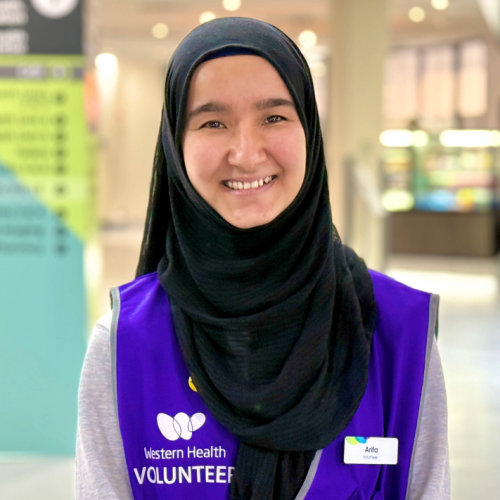
Arifa is a dedicated volunteer at Sunshine Hospital, combining her passion for helping others with a love of learning, every step of the way. She shares her time across two volunteer programs – the Volunteer Meal Assistance Program (VMAP) and in the Emergency Department.
In Emergency, she offers and makes drinks for consumers, chats to people waiting and helps with stocking paediatric supply trolley. For the Volunteer Meal Assistance Program (VMAP), she provides practical assistance during lunchtime such as opening food containers for consumers as they receive their meals, making mealtimes more sociable and enjoyable.
For Arifa, volunteering isn’t just about giving back; it’s also about making new friends, gaining new experiences, and feeling at home in a place that’s all about community.
“I love the environment, I feel at home here.” Arifa said.
Whether it’s making connections with patients or bonding with fellow volunteers, she’s all about creating a positive experience for everyone she meets.
“I want to help people, and volunteering gives me great personal fulfillment. It keeps me social, helps me make new friends, and I learn so much from other volunteers and patients.”
“Not only does volunteering benefit yourself and patients, but it also benefits society. You will learn a lot about different cultures, meet people from all sorts of backgrounds. It’s a great way to socialise and make new friends.
You will also be able to tell other people, ‘I volunteer at a hospital’, [and] that’s something you should be very proud of.”
Arifa speaks four languages – Urdu, Dari, Hazaragi, and English – which helps her connect with people from all walks of life. Having recently moved to Australia, Arifa says it has been great to learn how the health system of Australia compares to that of other countries.
“I am studying Health Science at university, so joining the volunteer program was a great way to learn about the hospital environment.”
When asked if any moment stands out from her time as volunteer, Arifa said every day was memorable and a new lesson. One story she remembers well was talking with a patient who had also migrated to Australia from another country.
“It was so interesting to hear how the health system in their country compared to that of Australia, and how it differed from my home country.”
“I love the [volunteering] environment… I feel at home here.”
Arifa
Western Health
In the media
We welcome opportunities to promote and amplify the impact of volunteers across Victoria.
Media plays a crucial role in shaping a culture that recognises and celebrates volunteers’ contributions, as well as inspiring more people to engage in volunteering.
National Volunteer Week 2025
As always, National Volunteer Week (19 – 25 May) was a key period for spotlighting volunteering to the broader community, particularly through the national media campaign. In Victoria, 374 items of coverage were secured throughout the week, achieving an estimated reach of over 18.3 million people.
Media interviews in 2024-25:
- 3AW Melbourne
- ABC Ballarat
- Southern FM 88.3
- 96three FM (Geelong)
- Vision Australia Radio – Bendigo 88.7
- 3CR Melbourne
- Triple M Sunraysia
- ABC Radio Melbourne
- 106.7 Hot FM (Mildura)
- Radio Adelaide

22 January 2025: ABC Radio (Drive)
16 May 2025: 3AW Melbourne
22 May 2025: ABC Radio - Melbourne
State Volunteering Awards
We proudly celebrated the 2024 Volunteering Awards at the RACV City Club in February, with finalists and special guests.
The Volunteering Awards are an opportunity to recognise and thank Victorian volunteers for the incredible contributions they make to our state and local communities.
Showcasing excellence by individuals and organisations, the Awards are run by Volunteering Victoria with the support of the Victorian State Government.
”Volunteering Victoria is honoured to partner with the Victorian Government and the Minister of Volunteers to recognise all our finalists and winners for their generosity and vital work across the state, and to showcase the very best examples of being Victorian.
Geoff SharpCEO, Volunteering Victoria